
Welcome to the Mathematical World!
Raj Chandra Bose
Pioneer of Combinatorics, Statistics, and Coding Theory
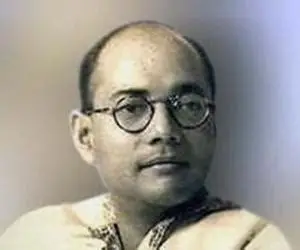
Raj Chandra Bose (1901 – 1987) was a distinguished Indian mathematician whose work bridged pure and applied mathematics. He was born on June 19, 1901, in Hoshangabad, Central Provinces (now Madhya Pradesh), India. Initially pursuing physics at Presidency College, Calcutta, he later shifted his interest to mathematics under the guidance of the eminent statistician P. C. Mahalanobis, founder of the Indian Statistical Institute (ISI). Soon after joining ISI, Bose established himself as a brilliant problem-solver in the emerging fields of combinatorics, design theory, and statistics.
Mathematical Contributions
Bose’s earliest influential work was in finite geometry and combinatorial design theory, where he formalized the principles of Balanced Incomplete Block Designs (BIBDs). These designs became critical tools for conducting large-scale statistical experiments in agriculture, medicine, and industry, enabling efficiency while ensuring accuracy.
A BIBD with parameters \((v, b, r, k, \lambda)\) satisfies the standard relations:
\[ v \cdot r = b \cdot k \] \[ r (k - 1) = \lambda (v - 1) \] \[ \lambda v (v - 1) = b k (k - 1) \]
Here:
- v = number of treatments
- b = number of blocks
- r = number of times each treatment is repeated
- k = size of each block
- \(\lambda\) = number of times each pair of treatments occurs together
Another landmark achievement was in coding theory, where Bose co-developed algebraic error-correcting codes that laid the foundation for the BCH (Bose–Chaudhuri–Hocquenghem) codes. The algebraic basis of such cyclic codes can be expressed as follows: choose a polynomial \( g(x) \) dividing \( x^n - 1 \) in the polynomial ring over the finite field \( GF(q) \). The cyclic code generated by \( g(x) \) is:
\[ C = \{ m(x) g(x) \;|\; m(x) \in GF(q), \; \deg(m(x)g(x)) < n \} \]
In many practical BCH constructions, one takes \( n = q^m - 1 \) and a generator polynomial whose roots are consecutive powers of a primitive element of \( GF(q^m) \).
Legacy and Impact
In 1959, Bose moved to the United States, serving as professor of statistics and mathematics at the University of North Carolina and later at Colorado State University. There, he mentored generations of mathematicians and engineers, influencing diverse applications of mathematics in science and technology.
His pioneering insights earned him international recognition, making him one of the few Indian mathematicians of his era to achieve global prominence in combinatorics, statistics, and coding theory. Bose’s work demonstrated that mathematics could transcend abstraction and drive practical innovation in fields such as communication systems and data transmission.
Raj Chandra Bose passed away on October 31, 1987, in Colorado, USA. Today, his name lives on in Bose–Chaudhuri codes, design theory, and in the thriving mathematical community that continues to build upon his groundbreaking methods. He remains a shining example of how a mathematician can bridge theory and practice, leaving behind a legacy that powers much of modern communication technology.

All rights reserved by the Mathematical Unity
Contact: +8801400044645
Email: mathematicalhorse1453@gmail.com
Our Discord Server: Mathematical Unity [Ulus Riyadiyat]